The M&GN and me – chasing ghosts to the coast.

Ever since I was just a boy I’ve been more than a little bit obsessed with an old, abandoned railway line skirting the southern edge of the Mile Cross estate between the back of Sloughbottom Park and the River Wensum. In more recent times we’ve come to know this former railway as a footpath/cycleway named the “Marriott’s Way” and if you’ve ever wondered why the footpath is named this way, read on. Continue reading “The M&GN and me – chasing ghosts to the coast.”

The Inner-Link makes its mark and the end of City Station.

Going on from the last piece I wrote at the end of 2018 about Anglia Square, I was recently reminded of a Saturday afternoon back in 2011 when we were working on the Norwich City Station site as part of the Friends of Norwich City Station (FONCS) project. An elderly gent had come along to view our progress and he had brought along with him an envelope containg a handful of old negatives that he’d taken when he was younger. He said that they may be of some interest to us and kindly allowed me to borrow them, I just wish I could remember his name.

After I’d had them scanned I could see that they were taken throughout the 1960’s and were all taken in and around the City Station area, whilst the roads and buildings were being cleared in anticipation of the answer to all our dreams: The Inner-link Road. This road was about to be laid right through some irreplacably-historic parts of old Norwich, almost encircling the entire city as it went, like a really crap version of the City Wall. It was also going to go right over the top of the now-closed railway terminus made famous by the much-missed Midland and Great Northern Railway, the remains of which us dipsticks decided to try and dig up some half a century later.

blog5

Continue reading “The Inner-Link makes its mark and the end of City Station.”

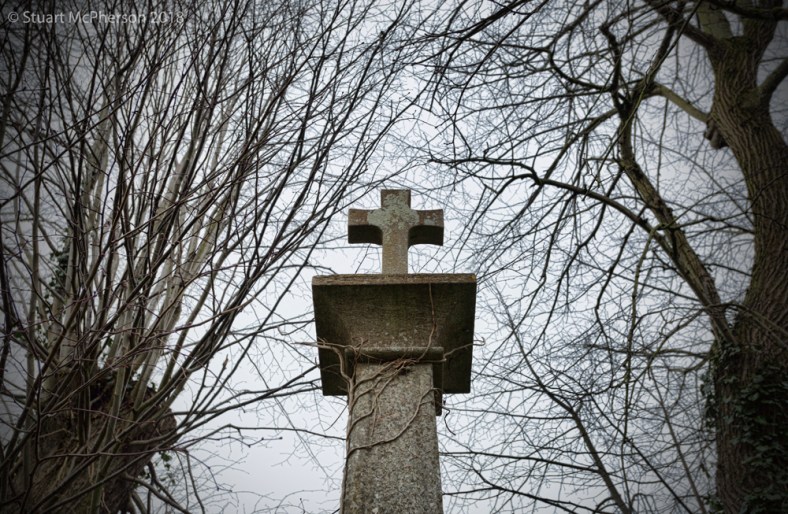
Crosses for miles

If you think of the original Mile Cross Estate as a triangle with the Southern point being where the Aylsham and Drayton Roads head off in separate directions towards their namesakes, the other two points of the estate triangle sit at either end of the aptly-named Boundary Road as the two roads leave the city and head off out into Norfolk.
Here the City and County of Norwich becomes (or became) the County of Norfolk.
County of Norwich? Yep, Norwich was still technically a County, even as recently as 1974. Back in 1404 the City of Norwich was made into a separate County (or a County Corporate) and it became independent from its host County of Norfolk. Like a lot of the rapidly-growing towns and Cities, Norwich was deemed important enough to become independent from its county, which (amongst other things) gave it a few extra privileges with regards to self-government that a City wouldn’t normally receive. Norwich was rapidly becoming England’s 2nd most important City only being out-ranked by London. An interesting point to add here is that the City of Norwich – inside the walls – was actually larger than the City of London. Continue reading “Crosses for miles”