The History of Sweet Briar Marsh

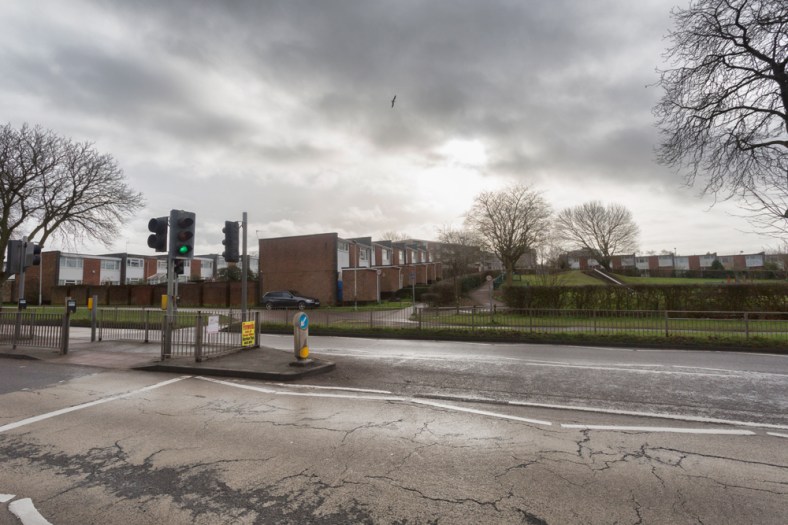
Sweet Briar marshes are both close to my home and close to my heart, situated less than five hundred meters away from my back garden and a place I loved exploring as a child. They’re a place where you can escape to and forget that you live within an ever-expanding city, seemingly intent on gobbling up all the lovely green bits that surround it. It’s also often fondly remembered by some of the veteran Mile Cross residents who would sneak across the railway lines, avoiding the railway police and the farmers to indulge in some dyke-jumping or to collect tadpoles. At thirty-six hectares the marshes are relic of the wet meadows that straddled the rare chalk stream named the river Wensum (which is the Anglo Saxon word for winding) all the way from its source out at Whissonsett in a remote part of the UK’s driest and flattest county, to it’s confluence with the river Yare just east of the city. There are only 210 of these rare chalk streams in the world, of which 160 (73%) are to be found here in the UK, many of which can be found right here in Norfolk. The largest being our very own river Wensum, which also happens to be one of the finest examples in the country. The Wensum glides by the southern edges of our estate from Hellesdon, entering under the fairly recently added Sweetbriar Bridge of 1933, before opening out nicely as the Sweetbriar and Mile Cross marshes right on our doorstep. From there it meanders at a leisurely pace right into the centre of our city, creating a little slither of green, an unusual little oasis of nature right up until the point it drops into the city (literally) over the sluices at New Mills Yard. From here on in the river is once again tidal as it merges into and rather confusingly gets consumed by it’s smaller sibling, the River Yare, which then transports the ghost of the Wensum all the way out to sea at the Yare’s mouth or Great Yarmouth. Wouldn’t ‘Great Wensumouth’ sound much better? From here it makes its way back into the atmosphere only to be dumped on the land once again upstream to start the whole cycle all over again.
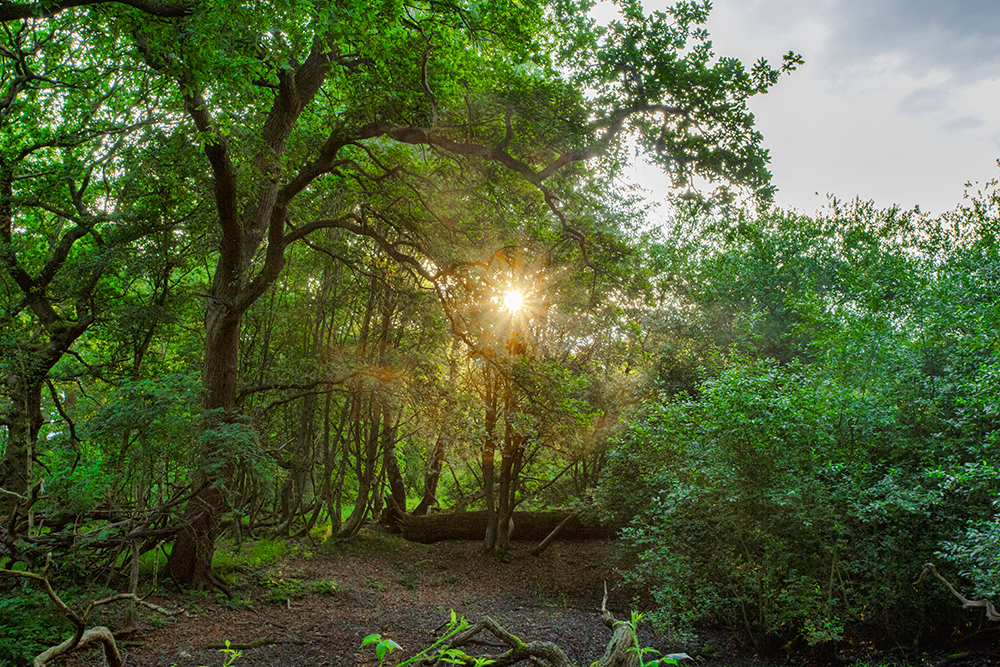
Evening sun on Sweetbriar marsh
Continue reading “The History of Sweet Briar Marsh”

The Tale of the Wensum Dipper

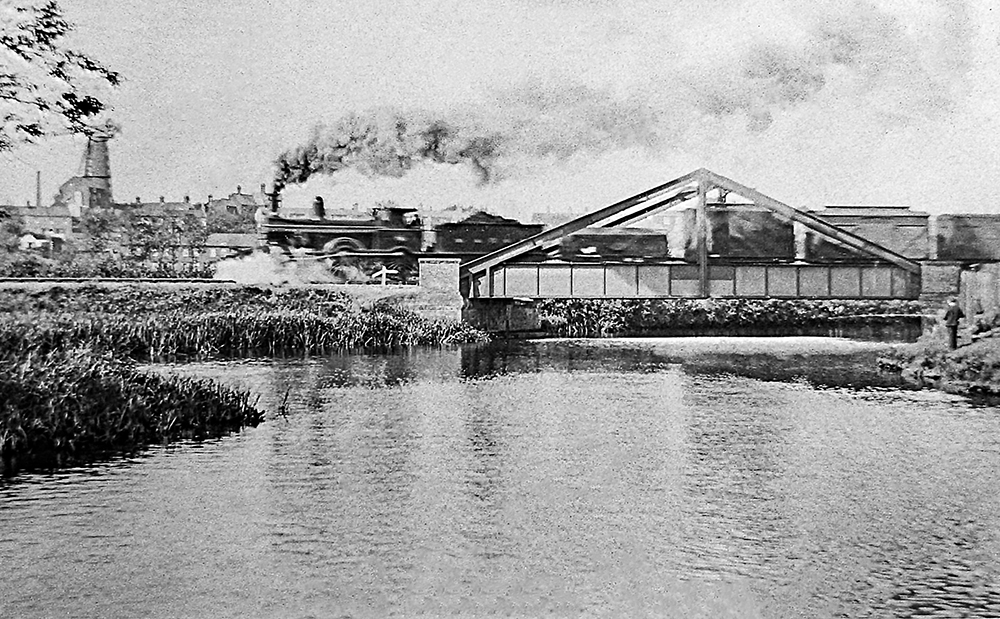
I have told the tale of the Wensum Dipper in the past, but that piece was written a while back now, and since then some new details and images have come to light in a massive collection of images and information about the history of Norwich, kindly given to me by another Mile Cross Resident, which has helped to shed some more light on this peculiar episode. For those of you who didn’t read the original piece, written way back in 2018 (have I really been running on for that long now? Mad), the story was fairly straight forward: A mix up with a set of points at the exit of the railway yard at City Station meant that a locomotive pulling a long train ended up in the murky waters of the Wensum. I managed to fill in some of the gaps with some living recollections, a bit of local knowledge, including some fine research by my good friend and fellow Mile Cross lad (and one of our Norfolk Railway Heritage Group experts) John Batley, and a little bit of educated guesswork. Now knowing more detail, it seems that we had got some of the finer details spot-on with some of our educated guesses, which is always comforting to know.

The scene of the accident, captured in this wonderful, early image of the distinctive A-Frame bridge.
Continue reading “The Tale of the Wensum Dipper”

The Bells of St Mary, Coslany ring out across Mile Cross

Not long after Mile Cross had completed it’s first and second waves of house-building and providing this new housing estate with over 8,000 people, it was decided (by the Bishop of Norwich) that all of these new residents needed a bit more god in their lives. God would be shoe-horned into the new estate via the medium of a shiny, new church situated right on our doorsteps. The building of a new church is by no means a cheap venture so it was decided (once again by the bishop of Norwich) that a fundraising appeal for this new church would be sent out with haste.

Continue reading “The Bells of St Mary, Coslany ring out across Mile Cross”

Mile Cross Pioneers and The ‘Wooden Slums’

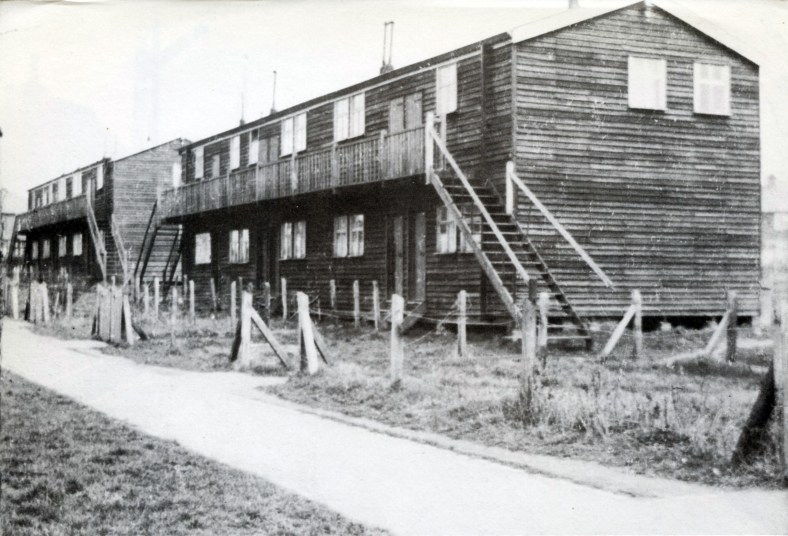
During the research phase of the recent Mile Cross 100 project one of the little details we were hoping to find out was who were the first people to move into a Mile Cross home on the new estate, however, I wasn’t surprised to learn that we couldn’t figure out exactly who those very first tenants were. I mean, we had some names of people who were here in the beginning, but it was nigh-on impossible to pin down any one person or family that were given the very first set of keys here in Mile Cross, which was a bit of a shame. We knew that people started moving in to some of the first purpose-built Council-owned homes in around 1923, at around the same time, or not long after the new bridge at Mile Cross was opened in September of the same year. By using the Kelly’s Directories (Heritage Centre, top floor, Forum) of the time I did manage to build a fairly accurate map of which streets were inhabited, and in which years. For example, at the start of 1924 there were people already living at Bolingbroke Road, Chambers Road, Civic Gardens, Losinga Crescent, Marshall Road and Rye Avenue, but not all of those roads were yet fully inhabited, or indeed completed at this point. People were effectively moving into a building site, and this theme continued on for about seven years.

Continue reading “Mile Cross Pioneers and The ‘Wooden Slums’”

Mile Cross Photographic Walks and Mile Cross Story Finders.

This is just a short entry to let you all know that I am still here. I realise that it’s been quite a while since I’ve written anything (for this website at least) but that doesn’t mean I’m no longer involved or engaged. Over the last few months I’ve been spread quite thin with various Mile Cross related projects; I’ve written a piece about the trees here in Mile Cross for the Norfolk Gardens Trust Magazine (downloadable here soon), I’ve been writing pieces for the new Mile Cross Newsletter, “mileXchange”, which hopefully you read after it dropped through your letterbox recently (if you live in Mile Cross, that is), the second issue should follow shortly. I’ve also been helping to come up with ideas on how to use the soon-to-open community space named the “mileXchange” in the former Draytona Bakery shop on Drayton Road. On top of all that, I’ve also spent a considerable amount of my spare time as one of the lead researchers for the “Mile Cross 100” project which in 2023 will celebrate the Mile Cross estate turning one hundred years of age.

MX100 logo.

We aim to celebrate a Centenary of Mile Cross by creating a play, a pageant, a website and a book about Mile Cross, so there will be lots to look forward to in the next few months, some of which we’re hoping residents or former residents of Mile Cross can get involved with.

Continue reading “Mile Cross Photographic Walks and Mile Cross Story Finders.”

PC Allcock takes a beating

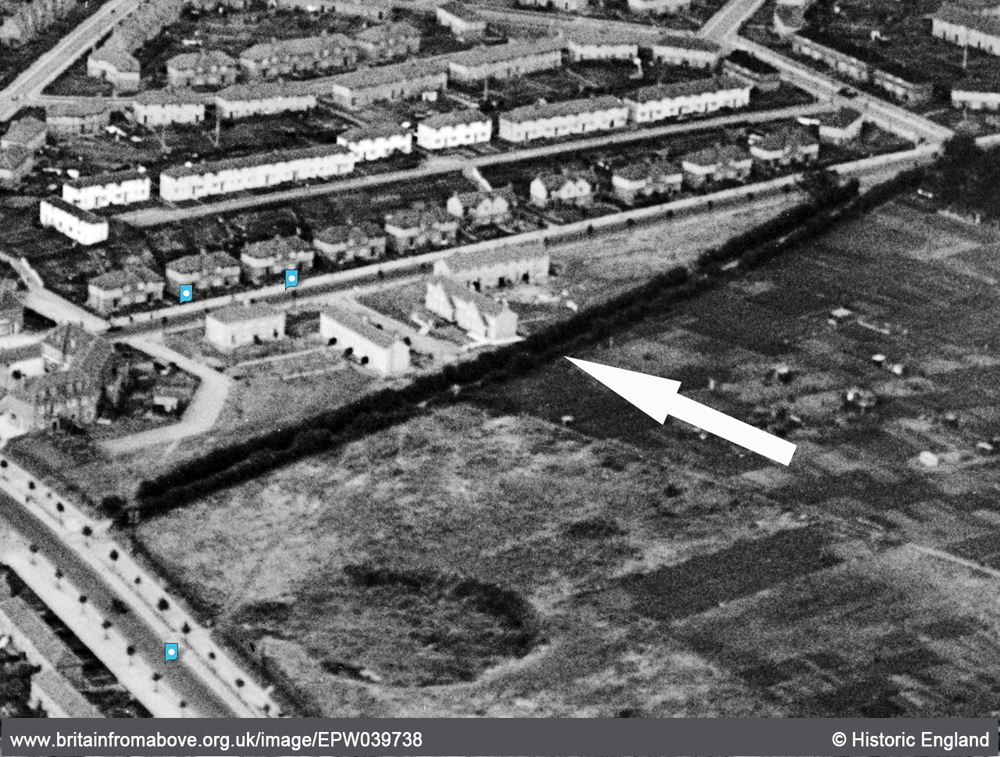
For a couple of my previous pieces ( Old Farm Lane and Sweetbriar Marsh ) I’d been studiously looking into the countryside landscape and the scattering of buildings that were here in what we now call Mile Cross, long before the later housing estate turned up. Whilst poring over the old maps and aerial photographs, searching the landscape for anything of interest, my eyes kept falling upon a little lane that was lost long ago. This little lane was called “Half Mile Lane” and it ran south from Upper Hellesdon Road (now Aylsham Road) down to Lower Hellesdon Road (now Drayton Road), seeming only exist to enable the local farmers to access the many fields that made up our landscape and to connect the two main roads together. Unlike the bloated and expanding city we live in today, Norwich had barely stretched out this far along Lower Hellesdon Road, the only buildings of any merit being the ancient Lower Hellesdon Farm and the pair of old Red Cottages about half a mile further out at the slough bottom. However, at the northern end of Half Mile Lane where it met Upper Hellesdon (Aylsham) Road, The city had been a little more adventurous, managing to branch its way out along the busy, Aylsham/Cromer Road as far as the boundary. Along this busier trunk road, which led out to Aylsham and the then the coast, the maps show that there were plenty of homes and businesses dotted along it all the way from the inner boundary at the old city walls, right the way up to the outer boundary of the city and county at the imaginatively named boundary at St Faith’s Cross, or the area known then as Mile Cross.

The lower half of Half Mile Lane running from Mile Cross Road (top right) to Drayton Road (bottom left), now lost under the gardens of the later added homes of Shorncliffe Avenue. In this image the fields have been replaced by houses to the west and allotments to the east, and the northern half of the lane has been repurposed as Mile Cross Road.

Why this particular little country lane with no buildings along it had intrigued me so much is anyone’s guess, but when I started searching for any references to it I wasn’t really expecting to find anything. To my delight I kept finding the road mentioned in newspaper articles from the early 1900’s, which only helped to feed my curiosities further. The lane was not completely forgotten by the passing of time either and two later-added roads, part of the “Mill Hill” extension to Mile Cross estate; Half Mile Road and Half Mile Close were named after it, even though they don’t mirror it. On top of this, although the old Half Mile Lane no longer exists in name, many of us have regularly and unwittingly travelled the northernmost half of it as we walk or drive along the later-added Mile Cross Road.

Continue reading “PC Allcock takes a beating”

History underfoot and hints of what was here before.

The wandering wonderer. I’m often wandering about Norwich with my camera in hand and my head in two separate places, usually the same space but in two completely different time-zones. No, not like you used to see in those 1980’s movies where some Fleet-Street shyster dressed in a suite that needed a volume control, who has three or four clocks on the wall behind him showing New York, London and Japan whilst he arrogantly barks down a mobile phone the size of a breeze-block. My head can be found wandering and wondering through and across completely different sets of decades, or floating between completely different centuries.

Continue reading “History underfoot and hints of what was here before.”

Lassie almost made it home.

This is a story that I have already written about in the past, over two separate pieces and I thought it was about time to merge the two old posts together to tell the whole story in one. It’s a story that demands attention and it makes far more sense to be able to read it all in one sitting.

In the very northern corner of the estate and just behind the Boundary Pub is a quiet little cul-de-sac named Spynke Road. Like a lot of the roads up there on the very fringes of the boundary it wasn’t always this quiet. Most of the roads adjoining Boundary Road were once connected directly to it, allowing for people to use it as a rat-run to avoid the increasing volumes of traffic building up on the increasingly-busy outer ring road. Soon these roads were deemed too unsafe for the local residents and it was decided that for everybody’s safety it would make sense to have them closed off. Because of these road closures the area now has a strangely quiet and closed-off feel, but with the unrelenting background drone of traffic. As annoying as that background droning may be to the visitors or new residents, the modern day residents of Spynke Road are probably more than happy for that to be the only drone they need to worry about, as will become apparent later on.

Continue reading “Lassie almost made it home.”

MX Connects Free Fun Day, including the first ever ‘Galley Hill Dash’. Saturday 31st July, 2021

Back in July (2021) If you were lucky enough to have lived on ‘The Cross’ you would have found a flyer dropped through your letterbox. Not only did it have a great little poster on the back to display in your window to show your love for the old estate, it’s also served to advertise the ‘MXCONNECTS’ free day of fun which I’d been helping to arrange throughout the first half of 2021. The Free Fun Day and Galley Hill Dash went ahead on the 31st July, and it would have gone ahead, come rain or shine. Thankfully, the weather held off and it was the perfect weather for such an event.

I love Mile Cross. And we all should, so share the love and get this poster in your window.

Below is the information side of the flyer, which highlighted the number of events that took place across the estate on the day and I’ve listed the main points underneath.

Continue reading “MX Connects Free Fun Day, including the first ever ‘Galley Hill Dash’. Saturday 31st July, 2021”

Arthur Prentice. “Fungi”

If you speak to anybody who remembers growing up on the Mile Cross Estate from the very early days and right through until the 1960’s it won’t take them too long before they mention a seemingly infamous character going by the name of “Fungi”, his farm or his pit. “Old Fungi”, “Farmer Fungi” or even “Cowboy Fungi” was actually a chap named Arthur Prentice and he had moved out of the city centre to and into number 64 Appleyard Crescent to be closer to the countryside, which back then was just across the road.

Arthur was a Market Gardener who before relocating to Mile Cross had lived at Rupert Street and Waddington Street and in 1911 at the age of 33 married Minnie Abbs at the Holy Trinity Church on Essex Street. Arthur’s father was a Bankers Agent named Frederick Prentice and his wife, Minnie came from a Gardening family; her father Jacob Abbs profession being a Gardener, which is probably how Arthur and Minnie had met.

Continue reading “Arthur Prentice. “Fungi””