Back in July (2021) If you were lucky enough to have lived on ‘The Cross’ you would have found a flyer dropped through your letterbox. Not only did it have a great little poster on the back to display in your window to show your love for the old estate, it’s also served to advertise the ‘MXCONNECTS’ free day of fun which I’d been helping to arrange throughout the first half of 2021. The Free Fun Day and Galley Hill Dash went ahead on the 31st July, and it would have gone ahead, come rain or shine. Thankfully, the weather held off and it was the perfect weather for such an event.
I love Mile Cross. And we all should, so share the love and get this poster in your window.
Below is the information side of the flyer, which highlighted the number of events that took place across the estate on the day and I’ve listed the main points underneath.
How do you write a piece about a man you’ve never actually seen a photograph of but know so much detail about? It’s quite hard and this is why I love historical photography, particularly photographs of people. If the subject is looking at the camera you can see into their eyes. Even if they’re no longer with us you can almost get a sense for the soul lurking behind those eyes looking back at you across the years. Unfortunately I can’t make this particular connection with the man I’m about to talk about and it troubles me a little.
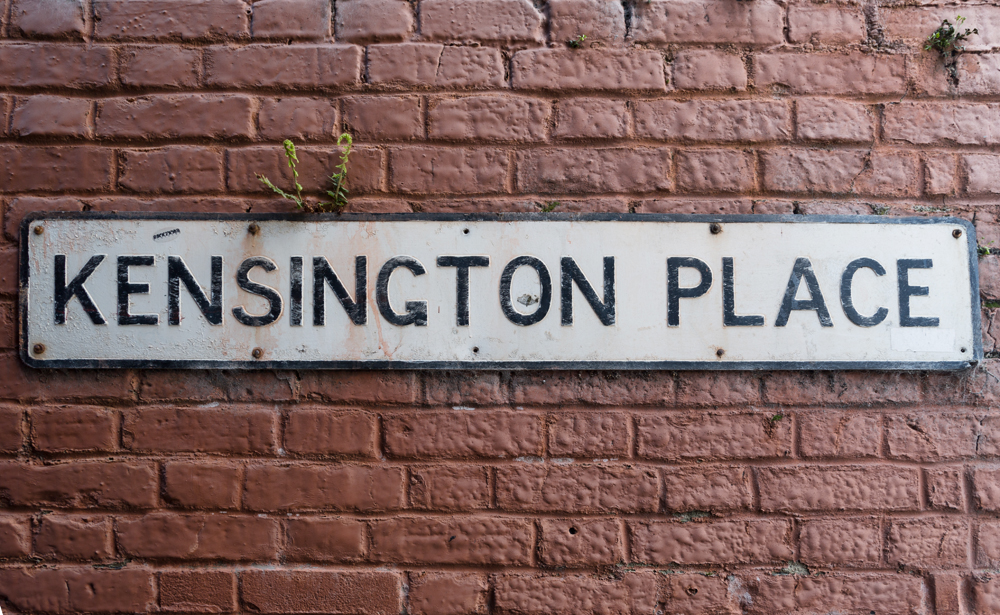
Albert Bayes came into this world on the 13th May 1890 at 4 Kensington Place, Lakenham and the life that was mapped out before this particular Lakenham boy was going to be something of a rollercoaster, which I’m going to delve into shortly; but as is often the case when I look into the history of people, I get side-tracked and stumble across hidden little corners of Norwich I’d never considered and this is the case here. The Kensington Place in which Albert was born only really survives in name these days as the tightly-packed double-row of houses, accessed by a small entrance off Queens Road have been swept away for some 1960’s un-improvements. However, the original entrance alleyway still survives along with the only real clue to it’s former use in an old yard-style name-plate, but it’s a blink and you’ll miss it affair as it’s so tiny.
It’s interesting to think that this tight little alleyway was once the main entrance to so many houses on a piece of land sandwiched between City Road, Hall Road and Queens Road and only a stones-throw from St Mark’s Church where a young Albert would have been christened. Unlike the cramped yards of the era, these houses looked as though they had a little bit of outside space, both front and rear and a chance at some good amounts of daylight once you’d entered through the tiny alleyway. As I stood in that tiny, little conduit taking the photograph below I could almost feel the ghosts of young Albert and the rest of his family brushing by as they made their way in an out of their home over a century previously.
If you speak to anybody who remembers growing up on the Mile Cross Estate from the very early days and right through until the 1960’s it won’t take them too long before they mention a seemingly infamous character going by the name of “Fungi”, his farm or his pit. “Old Fungi”, “Farmer Fungi” or even “Cowboy Fungi” was actually a chap named Arthur Prentice and he had moved out of the city centre to and into number 64 Appleyard Crescent to be closer to the countryside, which back then was just across the road.
Arthur was a Market Gardener who before relocating to Mile Cross had lived at Rupert Street and Waddington Street and in 1911 at the age of 33 married Minnie Abbs at the Holy Trinity Church on Essex Street. Arthur’s father was a Bankers Agent named Frederick Prentice and his wife, Minnie came from a Gardening family; her father Jacob Abbs profession being a Gardener, which is probably how Arthur and Minnie had met.
It seems like ages ago now that I was having a chat with one of my neighbours over my garden gate about the rather unique design of the particular style of houses that we live in on our Street and the subtle little differences in their designs and layouts. My particular house is one of the semi-detached, non-parlour, cottage-style, three bedroom houses that can only be found dotted around the Drayton Estate part of Mile Cross. To look at it from the outside it looks as though it’s exactly the same design as some of the three bed houses built along Bignold Road in longer terraces but it is fundamentally different in one major aspect, the Toilet.
Way back in 1928 a couple going by the names of William and Dorothy Beeston (Billy and Doll) moved into their new home right here in the middle of the Mile Cross estate. Both born in 1900 and aged 28, they’d travelled up from Suffolk to live here and the reason for their relocation across the border and into Norwich was in pursuit of a new career and a new life.
Billy had decided to move up to Mile Cross to try and make a life-long career out being a railwayman. As was the norm back then, he would have had to work incredibly hard in the pursuit of his dreams, starting at the very bottom and working his way up through the ranks, which was the only way when chasing a life on the rails. Luckily, young Billy had managed to land himself a job as an engine cleaner at Thorpe Station’s Shed 32A working for London and North Eastern Railway (LNER), which would turn out to be his first step on the long ladder towards his dreams of becoming a steam-engine driver.
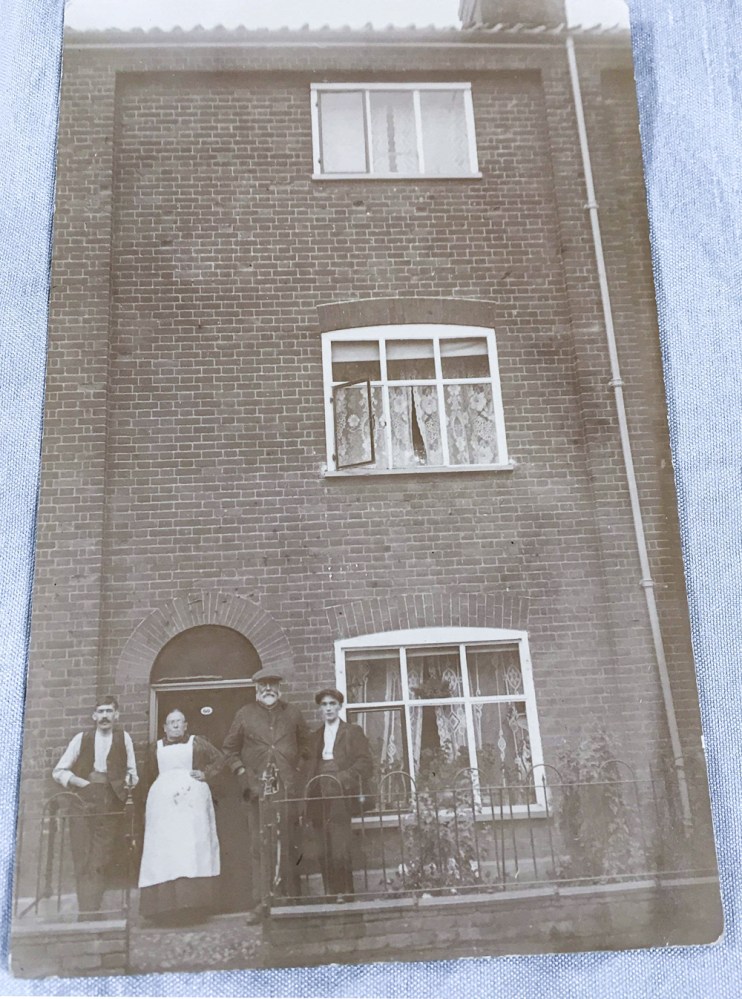
As often happens, I stumbled upon a fascinating old photograph taken in my neck of the woods being shared on one of the many local history Facebook groups and it really caught my attention. The photograph was of a family proudly standing outside a large-looking house on Aylsham Road, not too far from the city end. Being the inquisitive sort of chap that at I am, I have often wondered about this particular area and the small collection of homes along here that once backed on to what is now Clapham Wood and the former Putty Pierce’s Lime kiln site. Continue reading “Aylsham Road. A window into the lives of a Mile Cross Family in the early 1900’s”→
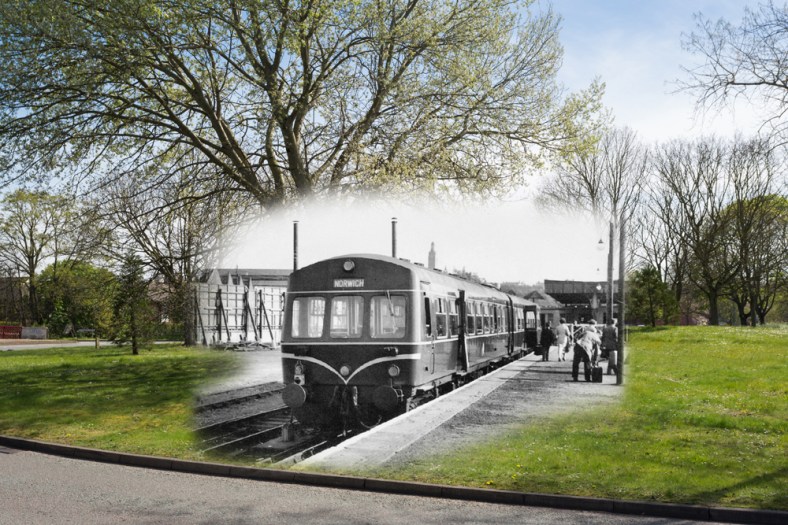
I don’t normally dedicate a whole blog post to just one photograph, particularly one not taken inside Mile Cross, but this one has some history with a bit of a rant attached, and because the blurb for the original photograph on Flickr started to resemble a blog entry in itself, I thought I might as well drag it out a little for the sake of my sanity. Read on. Continue reading “A ghost redone, redone. And a point, laboured…”→
Seeing as I’m stuck at home 23/7 and slowly losing my sanity due the boredom, I thought I’d put together a little photographic tour of Mile Cross using some of the old pictures from some of the previous blog entries. Walk with me on an imaginary tour of Mile Cross, just bear in mind that you’ll need to gloss over the fact that the timeline is all over the shop and that the route is a bit nonsensical. 2020 has been a nonsensical year so far anyway, so it should be easy enough to tag along. Continue reading “A walk through old Mile Cross”→
The other evening I did something I rarely get the chance to do these days and that was to sit in my ‘old man’ armchair with my two cats curled up on my lap and watch a bit of telly. As I scanned the Virgin box to see what I’d been recording, I found a fairly new series going by the name of the ‘Bone Detectives’ which looks into the history of people and their surroundings by analysing their bones.
The episode I had decided to watch was looking into the past of the remains of three young bodies (a male child and two young teenage girls), unearthed in Leeds whilst clearing a site to build a posh-knobby shopping centre. As it turned out, these poor little souls were victims of the Industrial revolution and had literally been worked to death, with all the evidence pointing to the likelihood that they would have been working from dawn until night in a nearby cotton mill.
Since writing this passionate piece about Anglia Square back at the end of 2018, I’ve spent about a year of my life involved with another Heritage Lottery Fund (HLF) project as a citizen researcher; delving into the history of, photographing and writing about our most infamous literal shopping corner (well four corners to be precise). The concrete-clad space-ship from the future of post-war Britain which crashed into Norwich-Over-The-Water. The not-quite-completed and misunderstood building project that people tend to either love or hate – Anglia Square:



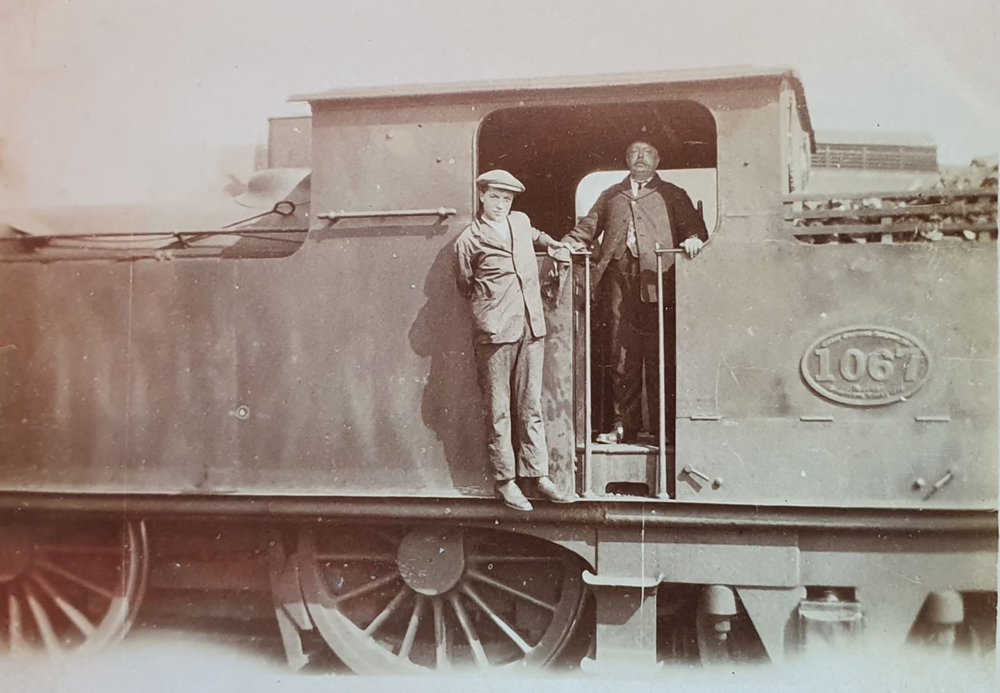 A young-looking Billy, posing on the side of an F3 2-4-2T loco, dreaming of one day becoming a driver.