Before the invention of the motor car came along, most people moving about the city and its surrounding areas would have walked (or later cycled) to wherever it was they were headed. If they needed to travel any great distance they’d have to choose to travel by horse (if they could afford one) or by train (if there was one nearby that happened to be going where they needed), but on the whole the majority of people used their little legs to get them from A to B Continue reading “Dolphin – walking, terror and tragedy”
Page 9 of 10
What is Mile Cross?
In hindsight this should have been my first blog post; but it wasn’t, and so here it is now. The idea came to me as I was trying to block out the deafening silence my little part of the estate affords me after nightfall. The lack of noise is still a surprise to me every evening Continue reading “What is Mile Cross?”
Old Fungi and his pit
Up until the 1960’s when Mile Cross began to grow in a north-westerly direction, this area; now a play park well-known amongst the Mile Cross kids (and former kids) for its really, really, really long slide (it seemed huge as a child) – was known locally as ‘Fungi’s pit’ Continue reading “Old Fungi and his pit”
The slough and the Knight.
For whatever geological reasons, the slough (pronounced ‘slew’) is a natural depression that sits at the Junction of Hellesdon Hall Road, Drayton Road (formerly Lower Hellesdon Road) and at the base of Galley Hill. I discovered that it used to be referred to as ‘the Slough’ after reading it in an old Raleigh Cycle Guide that dad found in an old barn in Rackheath back in the 1980’s. This old magazine was printed long before the estate even existed and noted the bad condition of the roadway here.
It wasn’t until very recently that the Council got around fixing the drainage issues that have blighted the area for as far back as I can remember, and going by the old magazine, a lot further; even predating the invention of the motor car. This area always filled with water after moderate rain and at still to this day floods a little further along at the junction of Whiffler Road after a particularly heavy downpour.

Over the Wensum and down with a bump.
Mile Cross sits to the North West of the City Centre and on the far bank of the river Wensum, so for access to the soon-to-be-built estate and subsequent expansion of the City further to the North and West, the Corporation needed to start building bridges.
Before any of the new bridges existed, the only means of crossing the Wensum – other than paying the ferryman at Dolphin – would have been at the old bridge in Hellesdon (Hellesdon Road) or at the newer (1882) bridge situated at Norwich City Station (now Halfords on the inner ring road). These two bridges are over a mile apart so it would have been a bit of a trek in either direction to get across. It seemed more important to get the Loco’s and their trains over the river than anything else, but people being people, always tend to find the quickest route of getting from A to B and I wonder how many people would have risked a dash across the narrow, single tracked A-Frame railway bridge to avoid paying the ferryman.
The first of the newer bridges to spring up was the Dolphin Footbridge.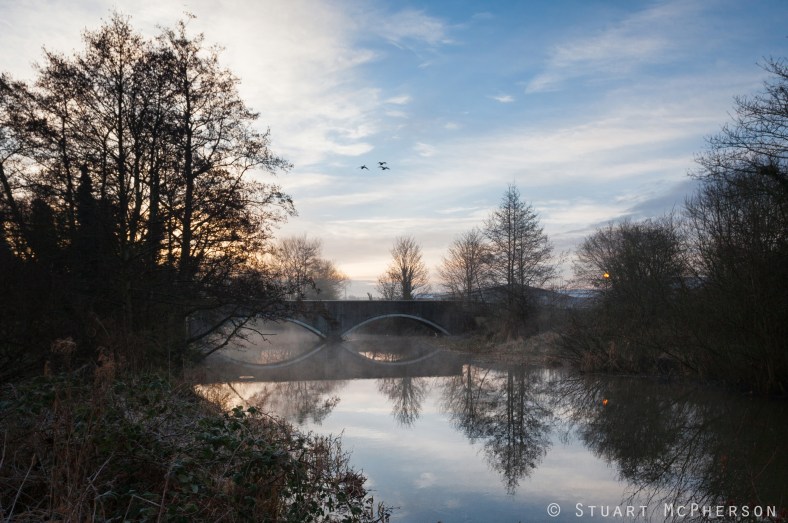 Continue reading “Over the Wensum and down with a bump.”
Sandys-Winsch goes gardening
Mile Cross Gardens.
 At the entrance to the estate at Suckling Avenue sit two ornamental gardens. These once-attractive gardens were designed by the parks superintendent Captain Sandys-Winch Continue reading “Sandys-Winsch goes gardening”
Mile Cross – sight lines
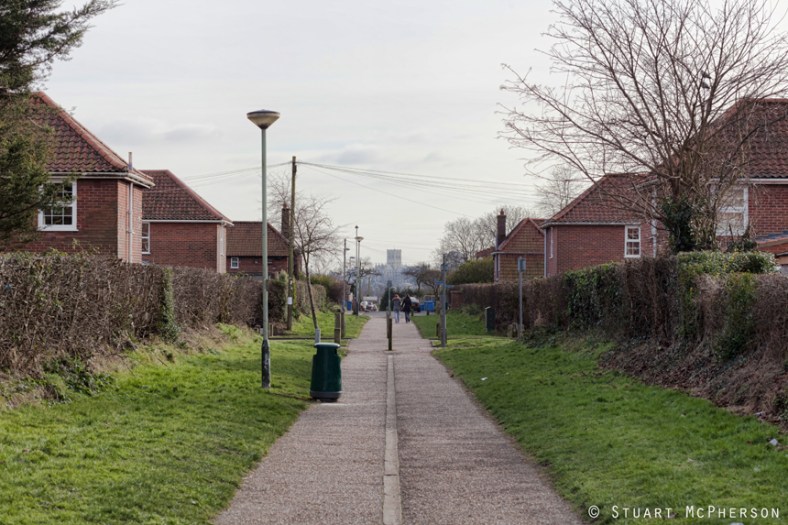
Sight lines: something sadly lacking from any of the later additions to the estate, and something seemingly lacking from anything else designed in Norwich from the 1960’s onwards.
This shot is taken looking South along the long footpath simply named: ‘The Lane’ by the estate’s engineers.
The King, the Queen and the Church.
After the initial phase of house building on the estate was complete attentions were turned towards providing more amenities for the inhabitants of Mile Cross. It was the 1930’s and a third pub and a Church were to be built in close proximity to each other at the northern end of Mile Cross Road.
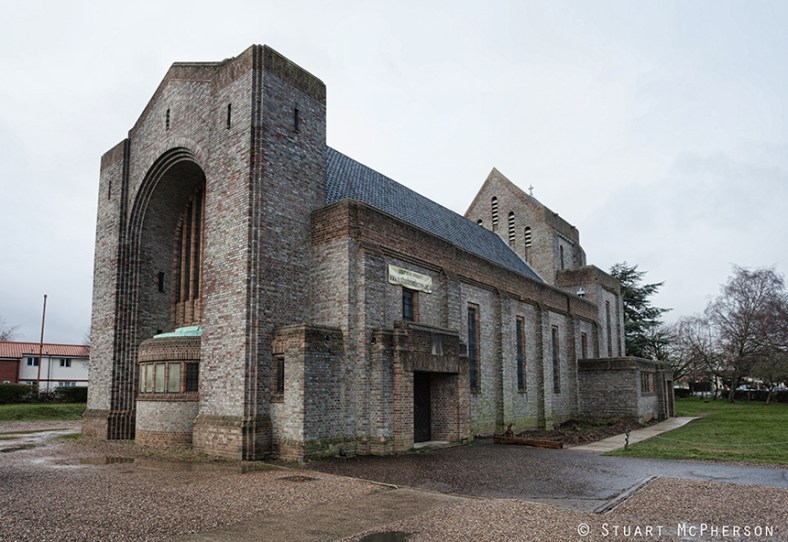
St Catherine’s Church went up first, it’s foundation Stone was laid by Queen Mary on the 2nd February 1935 and it had opened it’s doors by November the next year. It stands proudly looming over the crossroads of the Mile Cross, Aylsham and Woodcock roads replacing the earlier, Victorian-built St Katherine’s Mission Room of the 1880’s. It is a huge and imposing church when you get up close and personal with it, built primarily out of brick-faced concrete that seems to change colour depending on the light. It was funded somewhat ironically by the Wills Cigarette Family. I’m not a religious man by any means but I do love a nice bit of architecture and this building is rich in it; both inside and out, especially with its Art-Deco inspired interior. Next time you’re passing, pop in and have a look, you might be surprised at how attractive it is. I found the staff (is that the right word?) most welcoming too.
Mile Cross – topography to the point
Before I start, here’s a little warning to let you know that you’re going to see the word “point” a lot. Sorry.
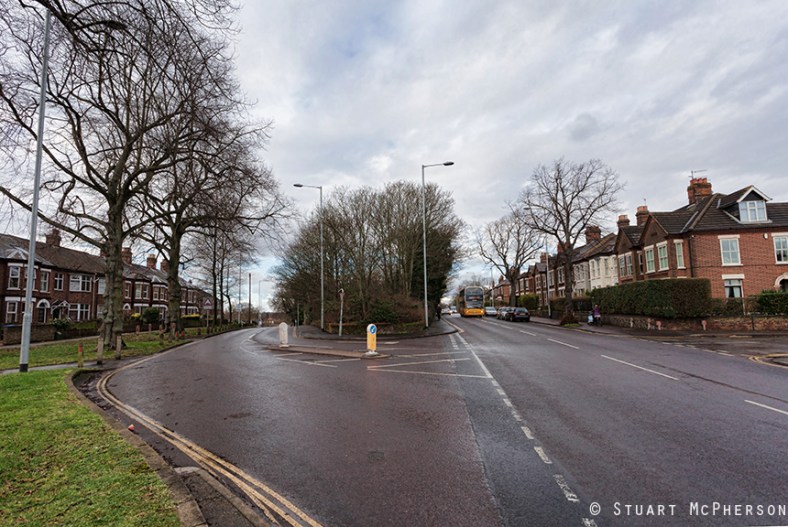
At the very south-western extreme of the estate, the two major boundary routes, the Fakenham and Aylsham Roads meet at a single point. It’s at this point (I did warn you) that you can get a real feel for the topography of the estate. Aylsham Road heads uphill slightly all the way up to the Boundary, and the Fakenham road drops away sharply as it heads off down into the bottom of the Wensum Valley before slowly creeping back up towards Hellesdon. Even out here, Norfolk is far from flat.
Mile Cross – expansion and toilets.
Moving North along Bignold Road will find you following in the footsteps (or tyre tracks) of the first builders onto the estate. Bignold road heads it’s way north from Drayton Road until it reaches the horseshoe shape that is Appleyard Crescent; which has become 0.7% more infamous since the resurgence of the Star Wars series of films (more on that later in the series).

 The Mile Cross Man