I have told the tale of the Wensum Dipper in the past, but that piece was written a while back now, and since then some new details and images have come to light in a massive collection of images and information about the history of Norwich, kindly given to me by another Mile Cross Resident, which has helped to shed some more light on this peculiar episode. For those of you who didn’t read the original piece, written way back in 2018 (have I really been running on for that long now? Mad), the story was fairly straight forward: A mix up with a set of points at the exit of the railway yard at City Station meant that a locomotive pulling a long train ended up in the murky waters of the Wensum. I managed to fill in some of the gaps with some living recollections, a bit of local knowledge, including some fine research by my good friend and fellow Mile Cross lad (and one of our Norfolk Railway Heritage Group experts) John Batley, and a little bit of educated guesswork. Now knowing more detail, it seems that we had got some of the finer details spot-on with some of our educated guesses, which is always comforting to know.
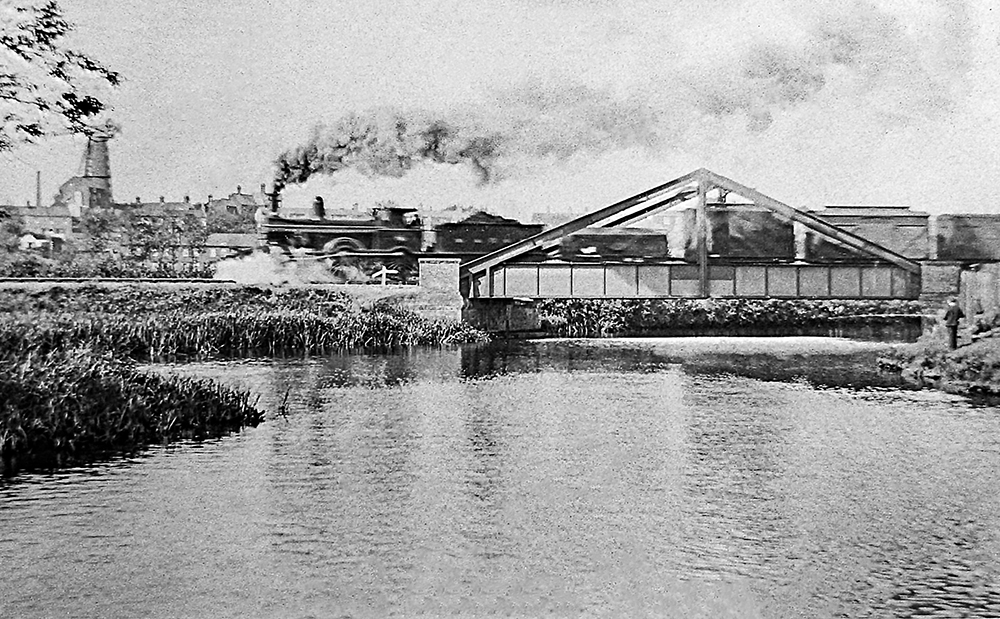
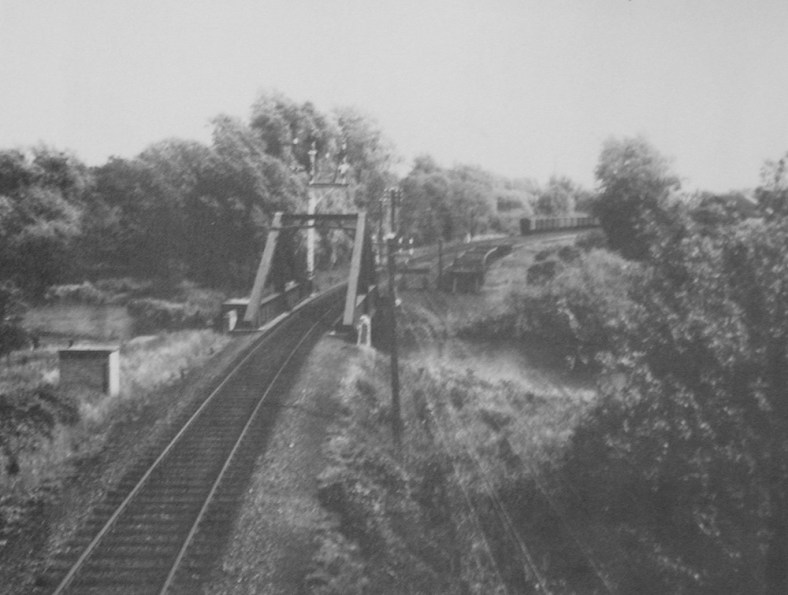
On a particularly cold and damp evening back on November 6th, 1946 and a J17 engine with a not insignificant train of about thirty goods wagons had left the lights of City Station Goods yard and out into the darkness of the main line that shadowed the Wensum, using the nice flat bottom of its valley as it snakes it’s way out across Norfolk countryside towards Melton Constable. Well that was the plan at least. As the locomotive and its train headed out of City and towards Mile Cross, it quickly became apparent to the crew that something wasn’t quite right. When the train left the yard, it wasn’t actually on the mainline as it headed towards the bridge and it’s single track over the Wensum, but had been diverted by an incorrectly set of points and was now rumbling down a siding next to it, a line that ended with a set of buffers only feet away from the riverbank, next to the bridge. The crew only had seconds to react, and unfortunately for them you can’t stop a massive train, especially one with over 30 wagons in a matter of seconds. Inevitably, the train failed to slow owing to the weight (just the engine and tender alone weighed about 90 tons) and the loco and their crew crashed through the buffer-stop and down the bank into the freezing cold water of the river Wensum, with wagons quickly and noisily piling up in a heap behind them. Although three trucks were derailed and badly damaged and two others partially derailed, the contents of this long train were practically unharmed. But what about the crew?
For fifteen anxious minutes after the accident, the driver and fireman were technically missing and just as worried railway officials were beginning to fear the worst and that they had been trapped in the river and drowned, the two-man crew, Driver H Scott and Fireman D Jackson, appeared out of the foggy darkness as they made their somewhat soggy return to the yard on foot. It turns out that the two men had become trapped in the barbed-wire entanglements which had formed part of the war-time defences that still surrounded the distinctive A-frame railway bridge spanning the river, accidentally walking into them in the darkness after escaping their locomotive which was partially submerged in the chilly and murky waters of the river Wensum. It was dark and foggy and other than the light of the signals there were no real lights to speak of.
Somehow the two men were mostly unhurt other than a few scratches from the crash and the barbed-wire, but the guard, Mr W Collins, and another driver and fireman (Mr J Greaves and a Mr A Bishop), who were travelling with him in the guards van at the rear of the train were slightly injured when they were thrown down by the impact. All five of the men, who worked and lived at Melton Constable, were able to return home after receiving treatment at the station. However, they were told that they would have to make their own way home as their train was now mostly in the river and a massive clean-up operation was now needed at the choke-point into City Station. I believe they went home in a taxi, which if you know how remote Melton Constable is even today, must have taken a fair bit of time back in 1946.
Seeing as this single line was the only way in and out of City Station and its massive yards (remember that it covered a large area from Heigham Street across Barker Street and to the river – an area now known as ‘City Industrial Estate’ and ‘train Wood’) The submerged locomotive and it’s rather long train needed to be cleared out of the way, and quickly. Thankfully being a siding mainline operations could still go ahead with caution.
After clearing away all of the wagons a temporary track from the river to the end of the siding had to be laid behind the loco and its tender and attempts were made to tow them out using a hawser (an extra-thick rope) attached to another locomotive. These first efforts to remove them were unsuccessful and even involved reducing the height of the river Wensum by about two feet on two separate occasions to aid the recovery of the locomotive, which would have involved opening up the sluices at New Mills and closing them at Hellesdon Mill. A new approach was needed, and it was decided that they needed the assistance of a massive travelling crane to help shift the wreckage. This crane was located at Thorpe Station which was only about a mile away as the crow flies, but by rail it was a journey of over 60 miles, a journey known by railway workers as the ‘around-the-world trip’, leaving Thorpe, heading all the way out to the coast and then looping back into Norwich via Melton Constable. Bearing in mind that most of the former M&GN track was single track and that they still had a daily quota of hundreds of goods and passenger trains coming in an out of Norwich City, this would have been quite the task.
The whole incident had inevitably caught the attention of the local press who had reported that the Goods Engine was still stuck in the Wensum and attempts to remove the engine and tender were paused at dusk seeing as the breakdown gang had been at work trying to rescue the engine and tender from the river since the early morning. On the 9th of November, the local rag had written a somewhat sarcastic article headed “Free M&GN Show“: One of the best free shows in Norwich recently has been the efforts of the rescue gang to recover the locomotive which plunged down the bank of the Wensum outside City Station earlier this week. When I passed the spot yesterday there was a steam-powered travelling crane, presumably from Melton Constable trying to haul the tender up the bank. Meanwhile the funnel of the engine stood dejectedly out of the river. Surely this was better fare than a gang of men digging a hole in the road, which, I am sure, would have attracted a larger crowd than the two elderly gentlemen, who with me, watched the crane tugging at the capsized engine…
Later on the press continued the story publishing a letter written by a Mr E A Gaul:
I will try to explain what happened with the engine in the river. There was signal box in City Goods yard Norwich City, all points were changed by hand, even the pair leading out on to the main line, and it was the job of the Head Shunter to look after these points. It was stressed to everybody who worked in the yard that if they saw the points set for the main line, they were to change them at once, and report it to the Head Shunter.
The procedure was the goods train would leave after the last passenger train was in, the signalman would phone the Head Shunter and he would change the points for the main line, give the train crew a green flag and they would be on their way. However, on this particular evening things were pretty quiet, so about 8 o’clock the shunter laid the points for the main line and told his men what he had done. Unfortunately, he had forgotten about the young man who had recently started, and was away in the goods depot at the time. Later, the lad came back into the yard, spotted the points laid to the mainline and immediately changed them back, but did not inform anyone what he had done! When the signalman rang and said the goods train could proceed (down the main line towards the bridge and on to Melton) the head shunter came out of his hut and gave the green light. The driver acknowledged and began to pick up a bit of speed, when suddenly the fireman realised that they were not on the main line but on a siding heading straight for the river. The crew immediately jumped clear, just before the train smashed into the buffer stops and took them with it into the river.
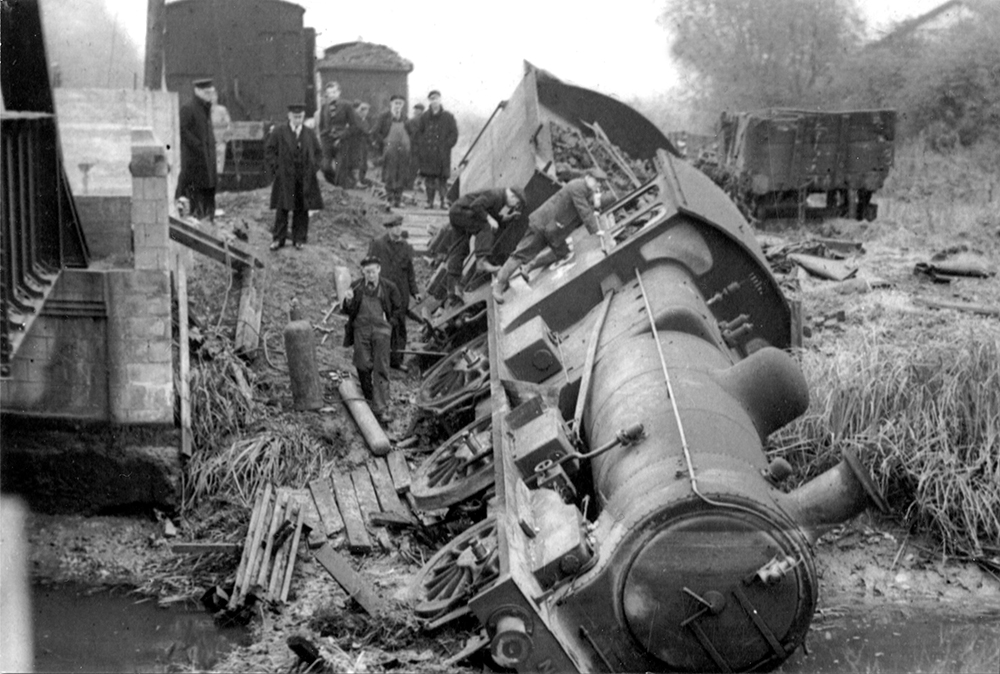
I was told this all the next morning when I arrived for work. All we could do was tidy up where the buffer stops had been and make some temporary stops. It wasn’t long before the Assistant Engineer came down with the Traffic Inspector who said a crane was on its way and would soon have it lifted out. Our boss, the Assistant Engineer, replied: “You won’t be able to lift it out, I will come back on Thursday and it will still be in the river!”. He was right, the crane could not lift it out. When it tried, the steel wire rope just bit into the casing of the engine. When our boss returned on Thursday, he said he would get the loco out on Sunday; meanwhile we had to get sleepers and rails on the site while he arranged for a welder with cutting gear to separate the tender from the engine.
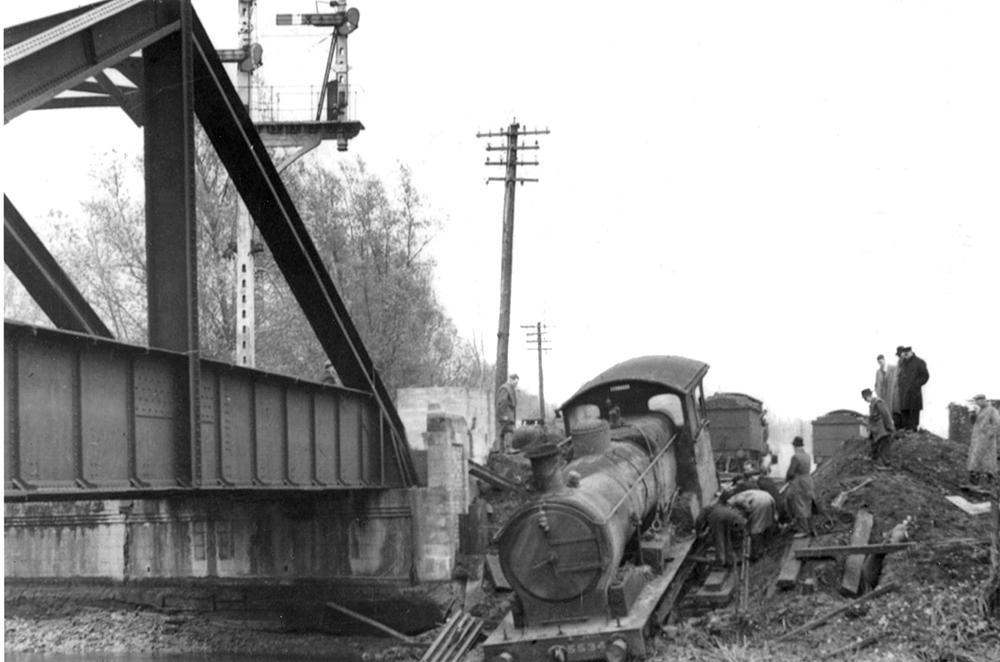
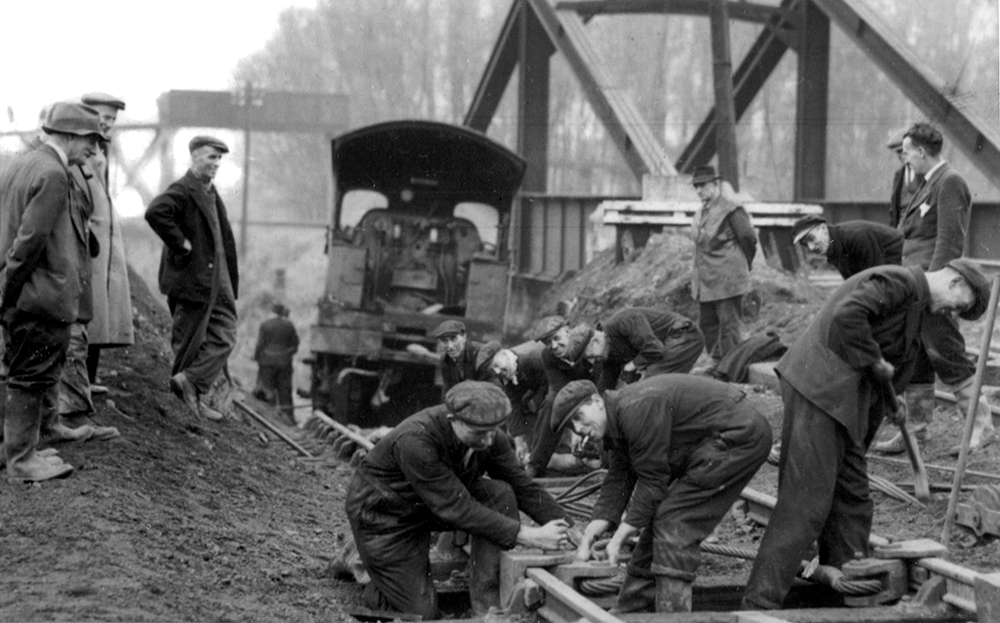
We reported for work at 7 o’clock on Sunday and started to lay a track from the siding to the wheels of the tender and then wedged the ends of the rail under the wheels. A loco was brought in, wire rope was attached to the stricken tender and it started to pull it out onto the track and clear of the temporary track. We then lengthened the temporary track, wedged the rails under the wheels which were in the water, and the loco came back, this time also assisted by a shunting engine for back-up. The procedure was repeated and the engine was successfully pulled from the river. The engineer’s name was Mr Johns…

So there we have it, the actual story of the Wensum Dipper and how it ended up in the River Wensum, as told by people involved with the incident, along with a collection of fascinating photographs that document its recovery, but as I mentioned the last time I wrote about this incident, this isn’t where the story ended for me.
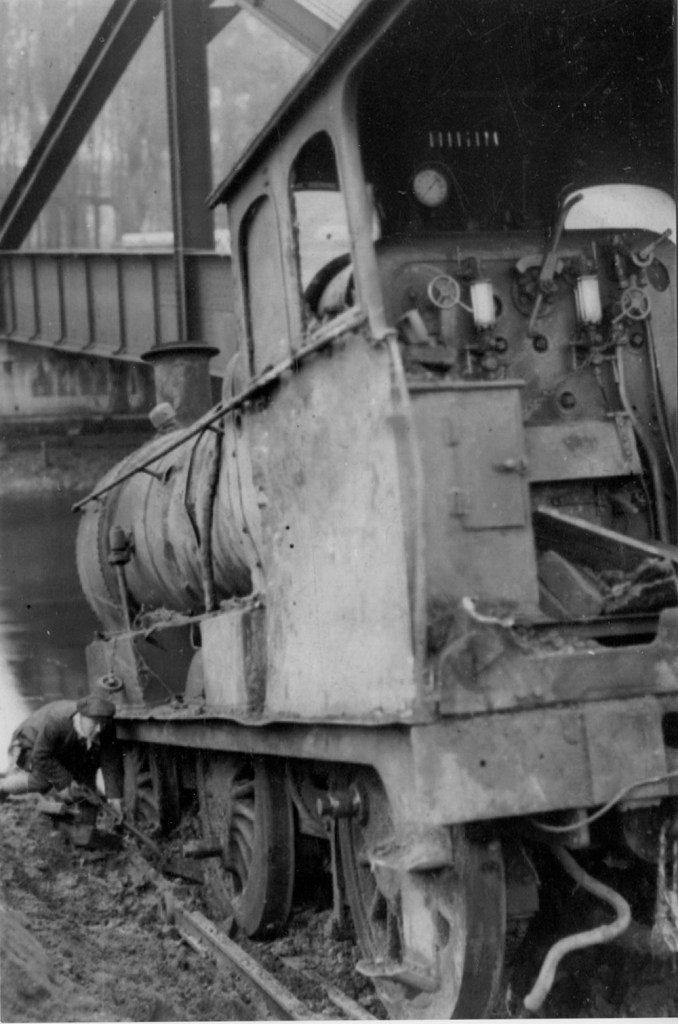
Having grown up in the 1980’s only a few hundred meters from where this railway used to run, I was always fascinated by it, particularly after my mother showed me the remains of Hellesdon station’s lonely platform hiding in amongst the bushes on a warm Sunday afternoon walk to Drayton, along what was soon to be much-used walking and cycle route known as Marriott’s Way. As kids we’d always use this unofficial path as a ‘short-cut’ into the city and my inquisitive, young eyes would always spot hints of railway along the section running from the river and into where City Station once stood. I’d notice a concrete sleeper here, some ballast there, the exposed flooring of the former engine shed, but being the 1980’s we didn’t have access to the internet, online maps or archive recourses, so other than using my imagination, there was no real way of visualising how it all would have looked as an actual working railway. As the years passed and I became an adult I slowly began to forget about those childhood curiosities, until I moved in to one of the newly built houses at the former Edwards and Holmes shoe factory site at Drayton Road. I worked in the city centre and it soon became apparent that a little path ran straight from these new houses and onto Marriott’s Way close to Dolphin Bridge. My childhood shortcut had now become an actual shortcut to get to work, and as I cycled back and forth, those childhood curiosities were reignited.

Thankfully for me, the Internet was now a very handy tool to help me scratch a very old itch, and the rest they say is history. Well, history mixed with the present. I was able to find old photographs of those images of a working railway I could only imagine as a child and decided to recreate them in the form of ‘re-photography’. Taking the old image and recreating it in the current landscape to create ‘ghost’ images, such as the one below, taken of the Wensum Dipper next to what is now the Dragon Bridge, a pedestrian replacement for the old A-Frame that was removed rather too hastily.
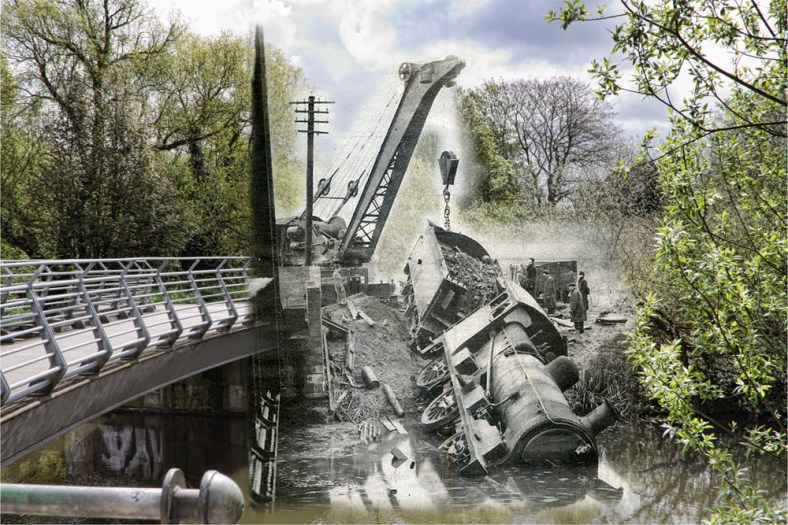
This style of ‘ghost’ re-photography became really popular from about 2012 onwards and in 2014 I was asked to appear Mustard TV (remember that channel?) to talk about them (which was as cringe as hell) as well as being asked to do a few exhibitions to show off these railway ghost images, one of which was in the former Railway Institute at Melton Constable. Towards the end of the day an elderly gentleman came in to the exhibition and he was rather taken aback by one of the photographs in particular: The ‘Wensum Dipper’ (pictured above). With a twinkle in his eye he told me that his name was David Jackson and that he was the fireman on that very Loco the day it crashed into the cold and murky Wensum near to Mile Cross. Amazingly, he had never seen any photographs of the accident. I don’t know who was more surprised, me or him! It was a wonderful moment and one that I’ll never forget. Before he left I asked if I could take a picture of him holding the photograph and he kindly obliged, and below is the picture of David holding the ‘ghost’ image of his loco being hauled back out of the Wensum by that massive crane next to today’s ‘Dragon’ Bridge. I absolutely adore this image, but I’m sad to say that David has since passed away.

Whilst I had David’s attention I asked him if he could shed a bit of light on the incident and he kindly agreed, and went on to tell me the story of that rather eventful evening in his own words:
“The line seemed smoother than normal and I had an inkling that something wasn’t right, but before I had time to realise what it was we crashed through the buffers and ended up in the river. As the train settled the fire started to come up and out of the firebox door and I started to get a bit worried that I might be burnt to a crisp, luckily the tender had come to rest in the vertical position after being pushed up by the wagons and it emptied it’s water all over me, cooling me down.
I had to scramble out through tons of wire-mesh fencing that had came free from of one of the wagons and a barbed wire fence. Apart from a few scratches, looking like a drowned rat and cold, I was fine. I staggered back up to the station to be simply told to go home and report back for work tomorrow. I asked how we were supposed to get back to Melton and was told we’d have to sort our own transport out as we’d left our train in the river. We had to hire a taxi. We never did find out who was at fault for the accident, but from then on I was known as ‘The Wensum Duck!”
And there you have it, the full story of the Wensum Dipper. It’s amazing to think that these chaps heard nothing more about the accident and just reported back to work the next day as if nothing had happened. There was no health and safety review, no inquest; nothing. Back in Norwich It took days for the whole mess to be cleared up, which for many of the locals was a bit of a godsend. With the UK still very much feeling the pinch because of the recent war efforts, the massive lumps of quality railway coal would come in very handy at keeping the fires burning at home, and after the recovery gangs had finished their rescue attempts in the evenings, many locals snuck in under the cover of darkness and pilfered away all of the coal from the very-full tender. There would have been a few fires burning a lot brighter than they had burned in a long while thanks to the Wensum Dipper.
If you haven’t already seen it, I wrote a piece about the M&GN Ghost photographs a while back and it can be found here: The M&GN and me – chasing ghosts to the coast.
Thanks once again for reading this stuff,
Stu
 The Mile Cross Man
Thanks for this article, it’s very interesting. The accident has been covered over the years in the M&GN Circle’s monthly ‘Bulletin’, but I don’t think we’ve seen many of the photos before.
If anyone is interested in finding out more about the M&GN Circle, full details can be found on our website, which also includes a free, downloadable index to the Bulletin:
http://www.mgncircle.org.uk
LikeLike
So didn’t you have to run on the MGNR line the other way from Sloughbottom for cross country runs??
LikeLike
Certainly did, across the park, down the ‘big dipper’ (storm drain) along the railway up to bridge, and back through the poisoned woods.
LikeLike
Always enjoy the stories about the area. My fascination began when researching the crash of my uncles B24 in WW2 in Norwich.
LikeLiked by 1 person
Did you see the pieces I wrote about Lassie Come Home and Lady Jane?
LikeLike
I believe I have seen Lady Jane but possibly not Lassie Come Home
LikeLike
LikeLike