When some people hear the phrase “Council Estate” they tend to form an image or opinion in their head. Often that image or those opinions can be slightly misguided. Read on…
The state of housing in the late Victorian era was becoming increasingly more dire as the century went on, partly because various initiatives to improve housing and sanitation had failed and partly because of a massive population explosion taking place in all of the major cities across the United Kingdom, further adding to the problem and ironically being the main reason that most of those initiatives were failing in the first place. The population of Norwich had more than doubled between 1801 and 1851 and this was leading to an increasingly severe shortage of housing and local amenities. Only the privileged tended to own their own homes whilst the rest of the working classes were left to put up with increasingly-expensive private rents whilst being restricted to the cramped and unsanitary conditions of the yards and terraces that were emerging all over Norwich as a by-product of the 19th century.
The housing and it’s associated welfare issues were becoming too large to ignore and It was time for change.
The Public Health act (which went by the rather catchy title: An act for consolidating and amending the Acts relating to Public Health in England ) was finally published in 1875 and in a nutshell it stated that state-owned housing needed to be built and that this housing needed to be built to a high standard; with running water, toilets and bathrooms, good light, plenty of space and with good local amenities.
One of the drawings from the Mile Cross plan: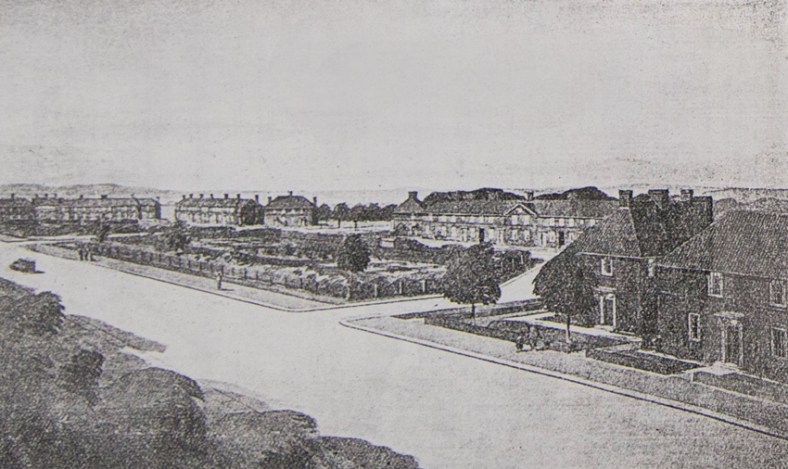
Continue reading “I’m ‘Council’ and I’m also a human being.”

 When you’re sat in one of the 5 lanes of traffic crawling along Boundary Road at a snail’s pace it’s hard to imagine that less than 100 years ago this now-vital traffic artery was little more than a rural path; a single-tracked sandy lane, rather conveniently named: ‘Sandy Lane’ up until the early 1900’s, before being renamed as the ‘Boundary Road’ we all know and ‘love’ today.


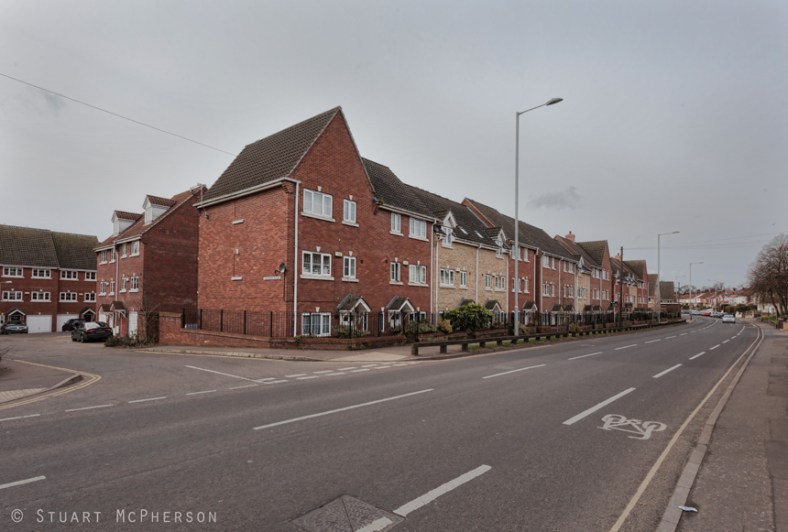 This cramped development of shoe box-sized houses was built on the former site of the Edwards and Holmes shoe factory. The factory was finally demolished in around 2002 and had stood there since it had been completely rebuilt in 1946


